Nachaniya / Performer
‘Nachaniya’ is a slur used in Bihar for oppressed-caste folk-artists of any gender who sing, dance, perform theatre, and play music. The term literally translates to ‘dancer’, but is used by people in a derogatory manner to mean “slut performer”. Contrary to popular derogation, the term is often reclaimed by folk artists for whom rhythm, performance, and language are means to self and social expression. ‘Nachaniya / Performer’ is an ongoing research-project, which explores the anti-caste and feminist assertions in folk songs and performances from Bhojpur region of Bihar, through conversations with 10 women folk performers.The project culminates in an audio-essay that draws on the recorded research materials to present and discuss:
1. How self and social expression is a taboo in caste-society
2. How songs archive scenes of oppression, but also desire and assertion, from history to present
3. How hegemony steals and appropriates women’s songs by replacing their content with propaganda
4. How folk expression presents intersection of productive labour and life
Ongoing Research Project; Audio-Essay (in-making; excerpts given below)
Part of Making Unmaking Fellowship, awarded by Maraa Media & Art Collective
2025-2026
Core Team: Poonam, Pinky, Radha, Ruby, Raju & Piyush
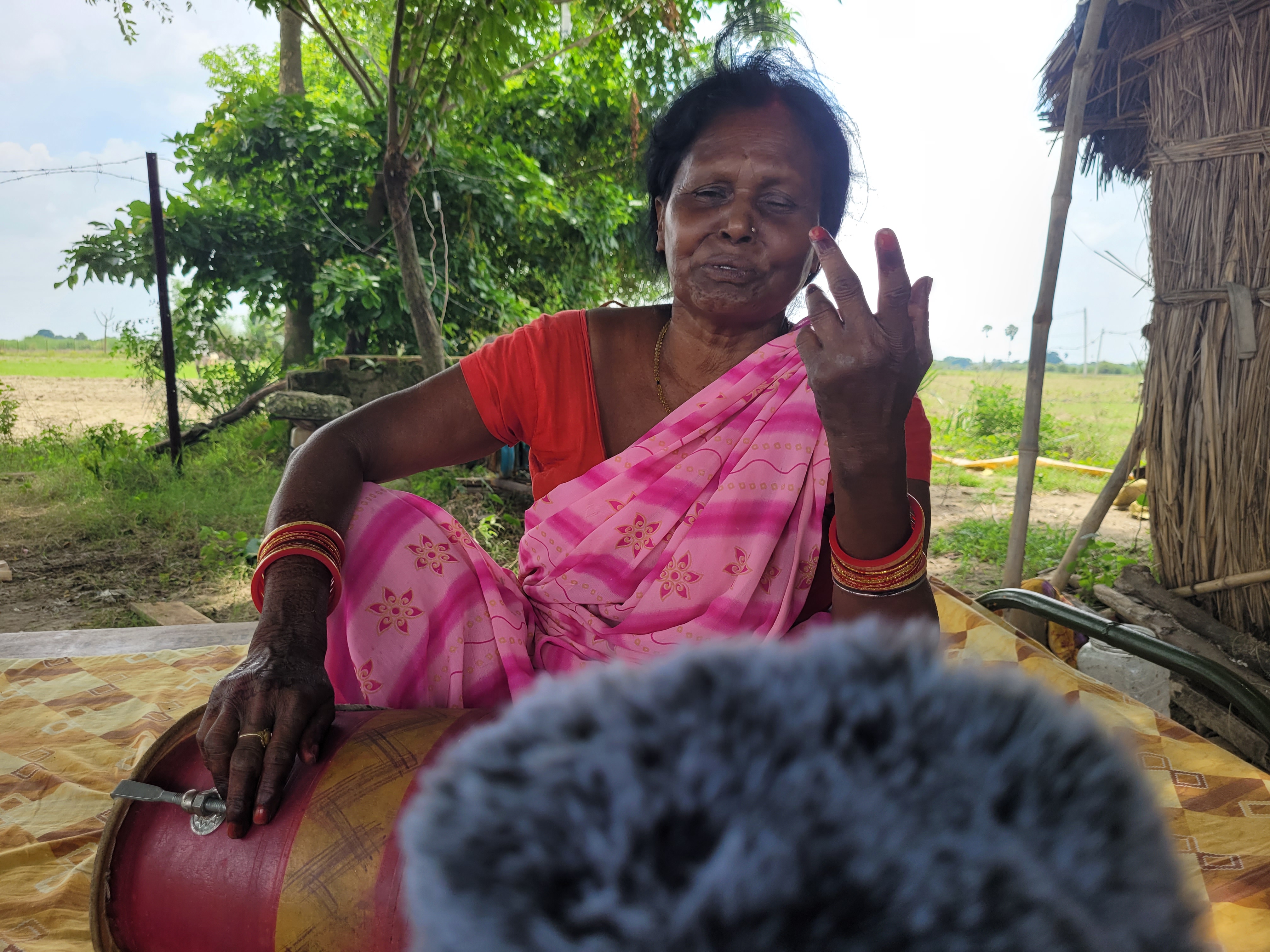


rough translation:
bamboo is cut, bamboo is cut, my desireless beloved, bamboo is cut,
bamboo is torn, bamboo is torn, my desireless beloved, bamboo is torn,
basket is sown, basket is sown, my desireless beloved, basket is sown,
earth is picked, earth is picked, my desireless beloved, earth is picked,
house is raised, house is raised, my desireless beloved, house is raised,
window has a view, window has a view, my desireless beloved, window has a view,
bed is laid, bed is laid, my desireless beloved, bed is laid,
child is born, child is born, my desireless beloved, child is born,
child asks for toy, child asks for toy, my desireless beloved, child asks for toy
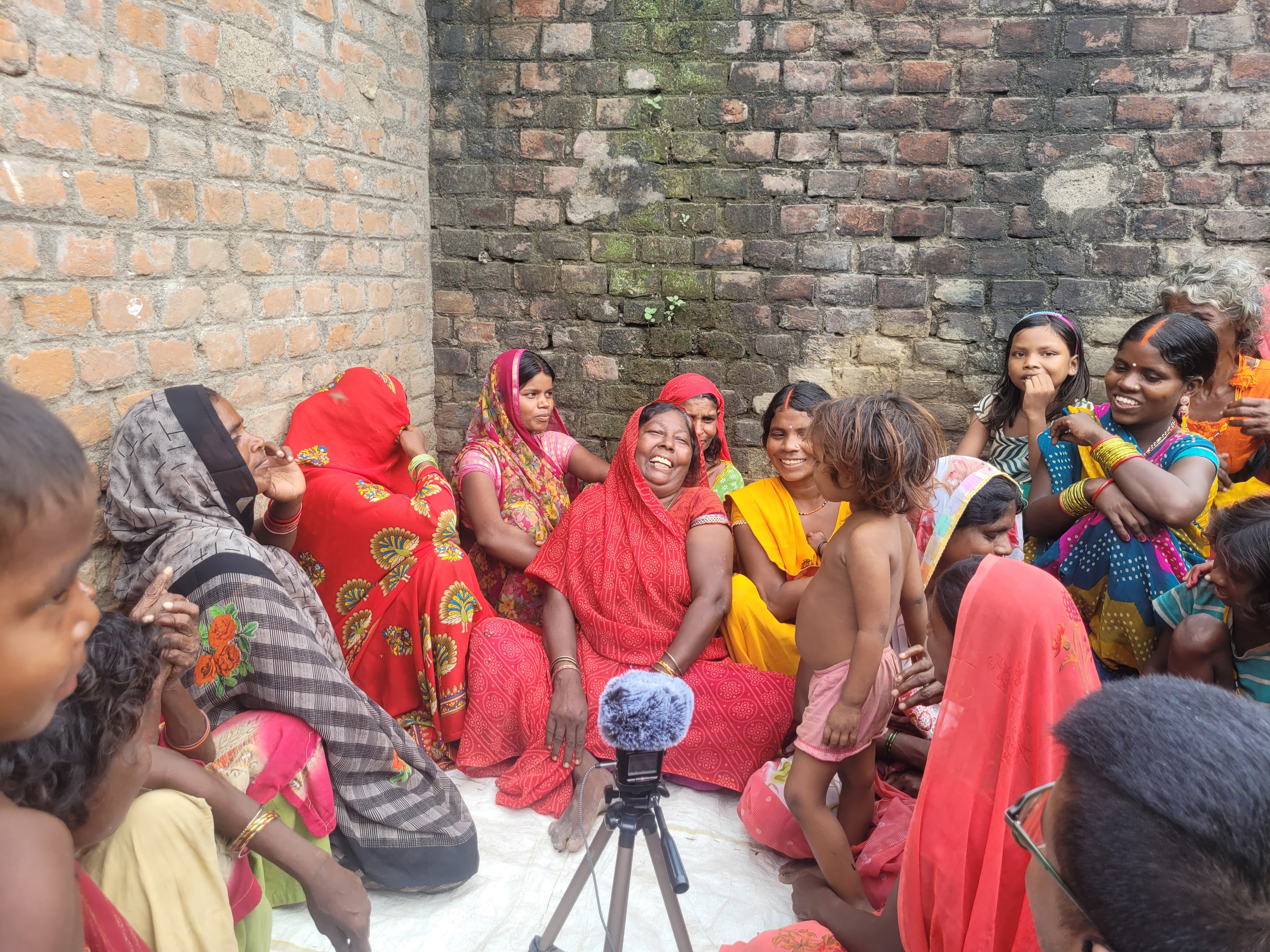
Excerpt 2: Maanti (Bhikaini) and her team perform a song that recounts how landlords exploited women labourers by denying them their wages, while also practicing untouchability by not providing them drinking water. This historical song documents caste-oppressive practices which were common till 40-45 years ago.
rough translation:
in the field, seed by seed, I sowed intently
when I asked for water, I was refused
at home my children are dying of hunger
murderer! makes me work whole day
when I ask for water, he shouts me away
[he shouts] “your kids may die, you women may die”
when I come to his door, he makes me broom the floor
when I ask for my wage, he refuses
how will my children live?
whole day I work, yet in the night, there is no fire in my hearth